Health and safety Policy definition.
According to ISO 45001 clause 3.14 – It is intentions and direction of an organization as formally expressed by its top management for health and safety.
A well-structured health and safety policy typically includes the following elements.
- Statement of Intent
- Responsibilities for Health and Safety
- Arrangements for Health and Safety
- Communication and Consultation
- Monitoring and Continuous Improvement
Covering these element helps ensure a structured and comprehensive approach to policy creation.
Your health and safety policy must also be easy for everybody in your organisation to understand and access.
Below, we look at the elements — of a health and safety policy in detail.
- Statement of Intent:
This section outlines how your organisation will handle health and safety policies and procedures. It should state your aims and demonstrate your commitment to taking health and safety management seriously. You can also include potential hazards and the control measures that need to be taken to mitigate the risk. Demonstrating leadership responsibility and compliance with legal requirements.
Once completed, it needs to be signed off by the person at the head of the organisation.
Example of a statement of intent
“We uphold health and safety through defined roles, structured controls, open dialogue, and ongoing improvement”
- Responsibilities for Health and Safety
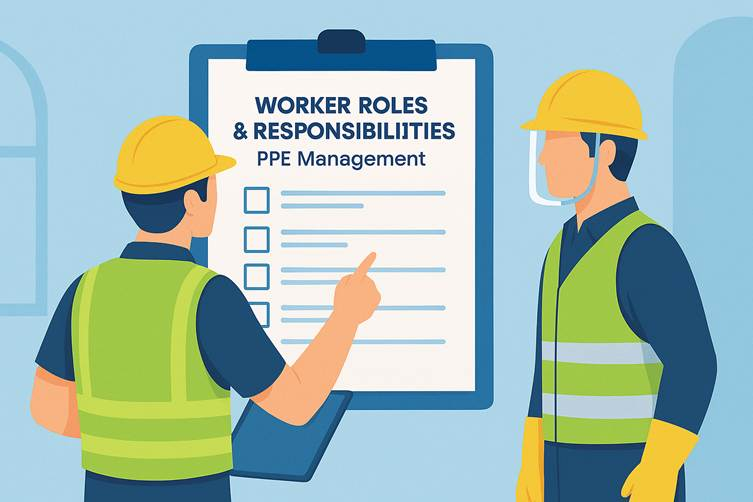
This part of your health and safety policy should list or display the specific responsibilities of different organisational roles. The names of individuals can also be mentioned if they are responsible for certain health and safety activities within the business to ensures that everyone knows their duties, to reduce confusion and improve compliance, such as Solomon Quality with integrity worker safety or managing the allocation of PPE.
It can be displayed in a written list, a chart, or another form of visual representation that clearly shows the hierarchy of responsibility for health and safety across all levels—senior management, supervisors, and employees in a simple term it is call who does what and when.
Examples of Responsibilities
- Compliance Managers – stay up to date with laws, regulations, and industry standards that may affect the business.
- Team Leads – educating new joiners on the health and safety policy, plus regular team training.
- Employees – to follow the safety behaviours listed in the policy and report hazards, near misses, and incidents according to the guidelines.
Figure 1 Safety Officer showing responsibility to employee
- Arrangements for Health and Safety
The arrangements element of your health and safety policy deals with the practicalities and how you’ll implement the commitments from the statement of intent.
You should include here the details of the steps you’re taking to improve health and safety objectives set from the statement of intent, such as:
- Risk assessment and Hazard Control
- Training systems and Awareness Programmes
- PPE
- Near miss or hazard classification
- Emergency and evacuation arrangements
- Accident Reporting and Investigation
- Health Surveillance and Welfare Facilities
Example of health and safety arrangements
“The Compliance team will undertake quarterly risk assessments to identify areas that may need improvement or are currently not included in the health and safety policy.”
- Communication and Consultation:
This element in health and safety deals with how your organization management will share information and engage workers in decisions that affect their well-being such as guide on safe behaviour, encouraging them of a safer and more collaborative workplace.
This includes:
For Communication, Include:
- How to educate and guide workers on safe behaviours.
- Channels of communication, like Safety posters, emails, toolbox talks, training sessions, digital dashboards, and verbal briefings
Example: “A factory manager sends weekly safety bulletins and holds daily pre-shift briefings to reinforce PPE usage and hazard awareness”.
For Consultation Include:
- How to involve workers in health and safety decisions. It’s a two-way process where management seeks input before implementing changes in other to build trust, improve decisions, and comply with legal duties.
- Methods to apply this involvement, such as Safety committees, health and safety representatives (HSRs), surveys, feedback forms, and open-door policies.
Example: “Before introducing a new chemical cleaning agent, a QA manager consults lab technicians to assess risks and gather suggestions for safe handling procedures”.

How to Implement a Health and Safety Policy Effectively
Beyond writing the first version of your health and safety policy, you also need to come up with a plan for training and distribution and a process for regular reviews.
Below, we share tips on how to effectively implement a health and safety policy within your organisation.
Streamline Policy Creation
If you’re just starting out as a business or have recently grown to the point where a health and safety policy is now a legal requirement, it can be scary to create one from scratch.
Similarly, incorporating regulatory or organisational changes into an existing policy can be time-consuming, and key details can be easily missed.
Using a reliable document management system can cut out a lot of the manual work as it can handle version control. More sophisticated software also leverages AI to generate policies based on your organisation’s framework and specific context.
Training and Distribution
Once you’ve created or updated your health and safety policy, you need to make sure that your team know about it. It should be incorporated as part of the onboarding process for all new joiners so that safety culture is embedded from the beginning.
As part of the responsibilities element of your policy, it can be helpful to formalise who oversees training so there is a clear division of labour and accountability.
Having a system in place that automates the sharing of policy updates also increases the likelihood of the information being distributed to the right people at the right time.
If you need my support, I can handle this for you remotely.
Regular Reviews and Updates
Health and safety laws and regulations are constantly changing to reflect evolving industry trends – and you need to ensure that your policy is updated to include these changes. Not keeping up with regulatory changes could lead to non-compliance and fines.
Build a Standard and regulatory compliance register that automates reminders to check for regulatory updates and carve out time regularly to review whether your health and safety policy needs any adjustments.
There is no legal requirement for how often your health and safety policy should be reviewed, but the Health and Safety Executive advise that it should be reviewed annually at a minimum and more often if your organisation has significantly changed.
How I Can Help
Creating a health and safety policy is only the first step – making sure it’s accessible, up to date, and actionable is where real impact happens. I can design a real time dashboard in excel or power BI to brings everything together by combining event reporting, audits and inspections, and document management into one easy-to-use platform.